
| Point | Details |
|---|---|
| Capacity means number + weight | Every inflatable has limits for occupants and total combined weight. |
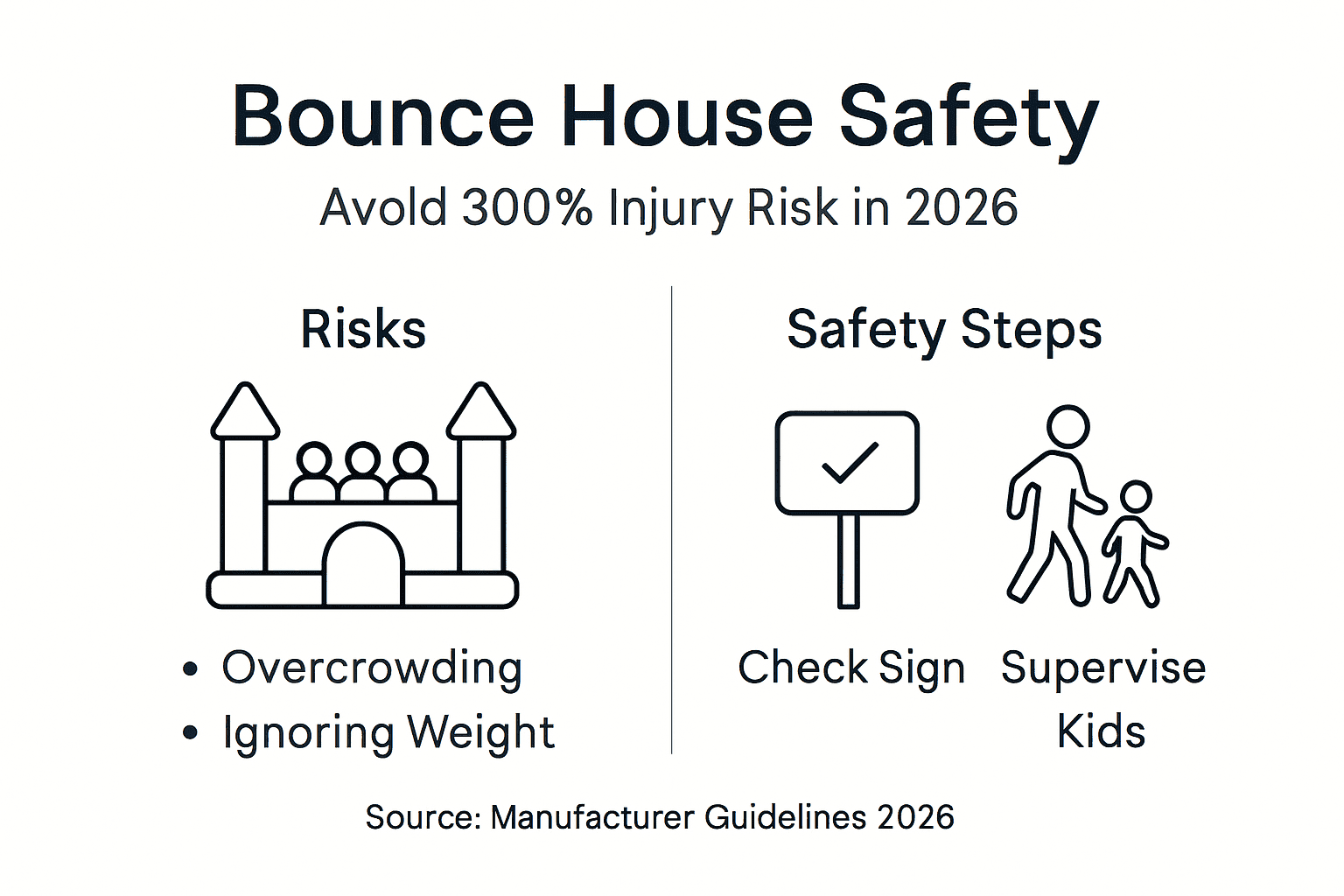
| Overcrowding raises injury risk | Collisions and falls increase sharply when limits are ignored. |
| Age grouping matters | Separate toddlers from older kids to prevent size-mismatch injuries. |
| Supervision enforces safety | Assign an adult to count entrants and stop unsafe behavior. |
| Weather changes everything | Wind and rain can require reducing use—or shutting down completely. |
Introduction to Bounce House Capacity
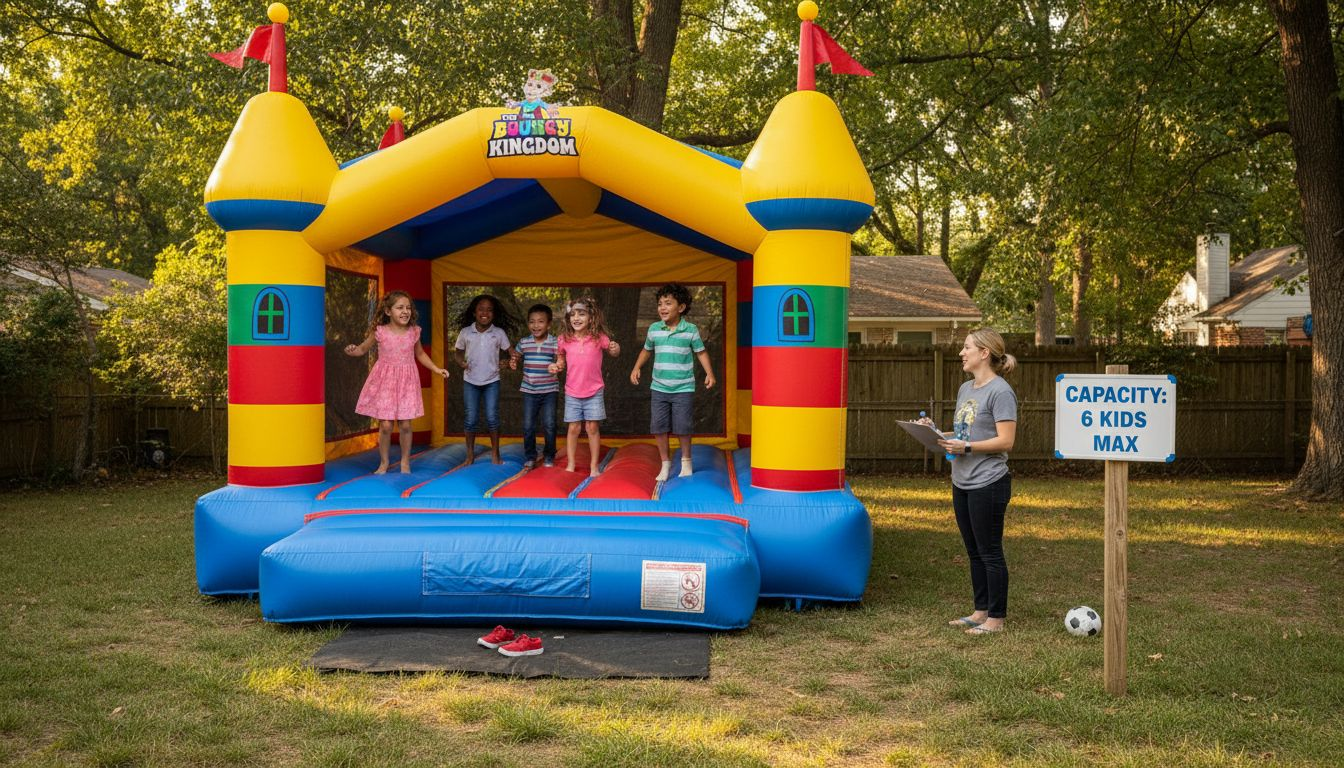
Bounce house capacity refers to two limits: the maximum number of children allowed inside at one time and the total combined weight all users cannot exceed. Each unit has manufacturer-defined limits that must be followed.
Smaller residential bounce houses typically accommodate 4–6 kids. Medium units often handle 6–8. Larger commercial units may support 8–10 when properly supervised and when kids are similar in age/size.
- Small (10×10): 4–6 kids, ~600–800 lbs total
- Medium (13×13): 6–8 kids, ~800–1,000 lbs total
- Large (15×15+): 8–10 kids, ~1,000–1,500 lbs total
- Combo units: varies; often 6–8 in bounce area only
Understanding Manufacturer Guidelines and Weight Limits
Manufacturers test each inflatable to determine safe operating limits. You’ll usually find capacity guidance on the unit label, in the rental agreement, or in setup instructions. Always verify both max occupants and total weight.
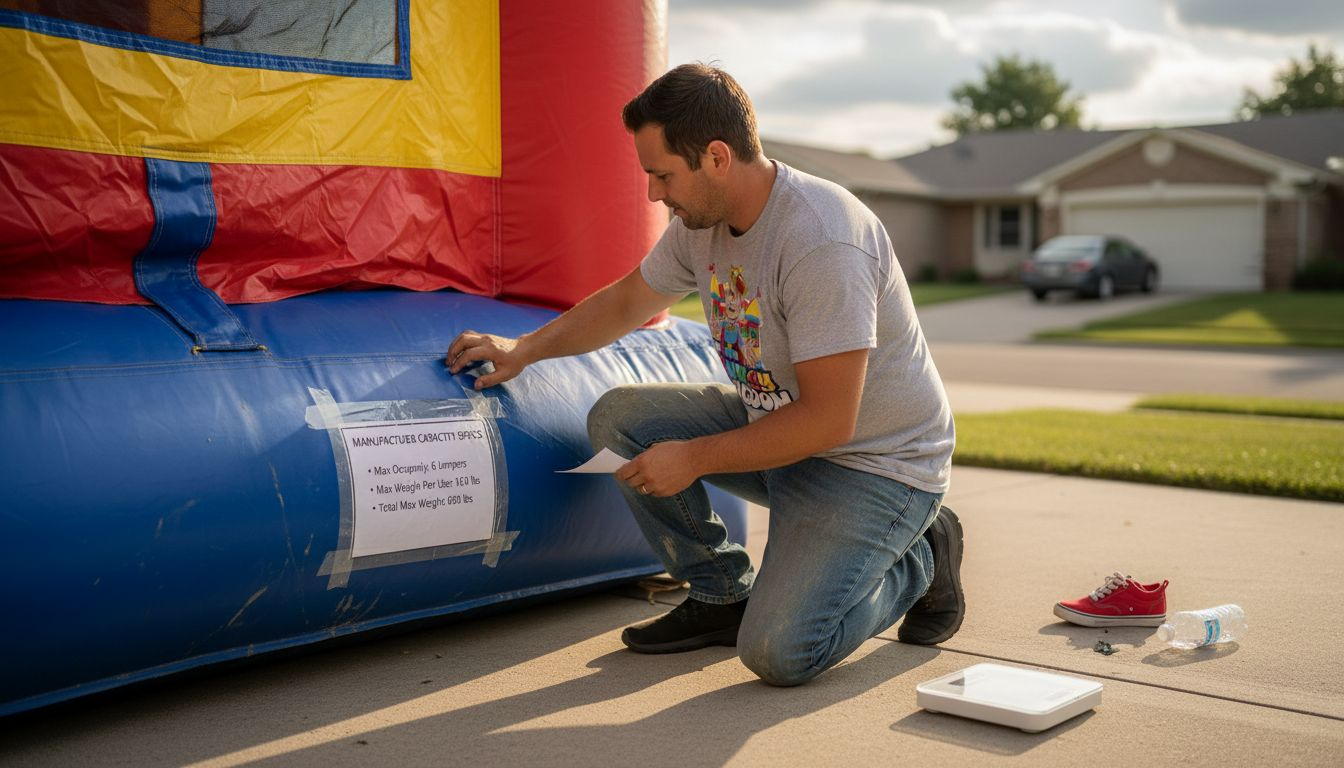
- Locate the capacity label near the entrance or on the exterior seam label.
- Read both occupant and total weight limits.
- Estimate average child weight to ensure you stay under the total.
- Confirm age recommendations match your guest list.
- Ask your rental company if anything is unclear before the event.
Take a quick photo of the capacity label during setup so your supervisors can reference it during the party.
Age, Size, and Grouping Considerations
Age and size change how many kids can safely bounce at the same time. Mixing toddlers with older children is one of the most common causes of injuries because larger kids bounce harder and can knock smaller kids down.
| Age Group | Recommended Max | Notes |
|---|---|---|
| 2–4 years | 3–4 | Best with an adult actively monitoring entry and rough play. |
| 5–7 years | 4–5 | Keep separate from older kids. |
| 8–12 years | 6–8 | Depends on unit size; enforce no flips/wrestling. |
| 13+ (teens) | 3–4 | Treat as adults for weight calculations. |
Use timed sessions (15–20 minutes) for different age groups. It keeps play safer and reduces arguing.
Common Misconceptions About Bounce House Capacity
The biggest myth is “more kids = more fun.” Overcrowding actually reduces fun and increases collisions. Capacity limits are not suggestions— they’re engineered safety thresholds.
“Supervision can’t prevent injuries caused by too many kids colliding in a small space—capacity limits must be enforced first.”
- “Just one more kid” adds risk fast.
- Looking only at number of kids but ignoring total weight is dangerous.
- Supervision helps, but it does not make overcrowding safe.
Supervision and Safety Best Practices
Assign an adult to actively manage the entrance and count kids in/out. A good supervisor also enforces rules: no flips, no wrestling, no piling on, and no mixing toddlers with older kids.
Supervisor Duties
- Count entrants/exits
- Keep entry clear
- Stop rough play immediately
- Enforce shoe/jewelry removal
Simple Party Rules
- Capacity posted at entrance
- One age group at a time
- No flips or wrestling
- Hydration breaks in heat
Environmental and Weather Considerations Affecting Capacity
Weather can reduce safe operation instantly. Wind, rain, extreme heat, and soft ground conditions all increase risk. If conditions turn unsafe, stop use immediately—no exceptions.
| Condition | Safe | High Risk | What to Do |
|---|---|---|---|
| Wind | Calm to moderate | Strong gusts | Pause use; follow safety guidance from your provider. |
| Rain | Light mist | Steady rain | Close unit; slippery vinyl increases falls. |
| Heat | Warm | Extreme heat | Short sessions + breaks + water + shade. |
| Ground | Firm/level | Soft/slope | Relocate or add secure anchoring per provider. |
Putting It All Together: Choosing the Right Capacity for Your Event
- Confirm your unit’s label for max occupants + total weight.
- Plan age-group sessions (especially toddlers vs older kids).
- Assign a supervisor to enforce capacity and rules.
- Monitor weather and stop use if conditions become unsafe.
- Post simple rules near the entrance so everyone follows the same standard.
Safe Bounce House Rentals for Your North Texas Event
The Bouncy Kingdom provides properly maintained inflatables with clear capacity guidance for families across North Texas. If you want help choosing the right unit size for your guest list and ages, we can recommend the best option for your party.
Need help choosing the right inflatable?
Tell us your guest ages and party size, and we’ll help you pick a bounce house that fits safely and keeps the fun going.
FAQ
What is the maximum number of kids allowed in a bounce house?
It depends on the unit size and the ages/weights of the kids using it. Always follow the manufacturer capacity label for your specific inflatable.
How does adult supervision affect bounce house safety?
Active supervision enforces capacity limits and prevents risky behavior like flips, wrestling, and crowding near the entrance.
Can weather conditions change bounce house capacity limits?
Yes. Wind, rain, and extreme heat can require reducing use or stopping completely for safety.
What are common mistakes parents make about bounce house capacity?
Overcrowding, mixing toddlers with older kids, ignoring total weight, and assuming supervision makes overcrowding safe.
